
Commercial solar incentives in Illinois are among the strongest in the country. Between state SREC revenue, utility rebates, and federal tax credits, a well-structured commercial project can recover a significant share of its cost, and these programs are designed to work together. Solar Energy Solutions helps businesses, institutions, and other organizations capture the full stack of benefits and manages the SREC program requirements from start to finish.
Illinois Shines for Commercial Projects
Illinois Shines, the state’s Adjustable Block Program, pays you for the clean energy your system produces. Every megawatt-hour (1,000 kWh) generated earns one Solar Renewable Energy Credit, or SREC, which the state purchases from you under a long-term contract. This is a bankable revenue stream entirely separate from any federal tax benefit.
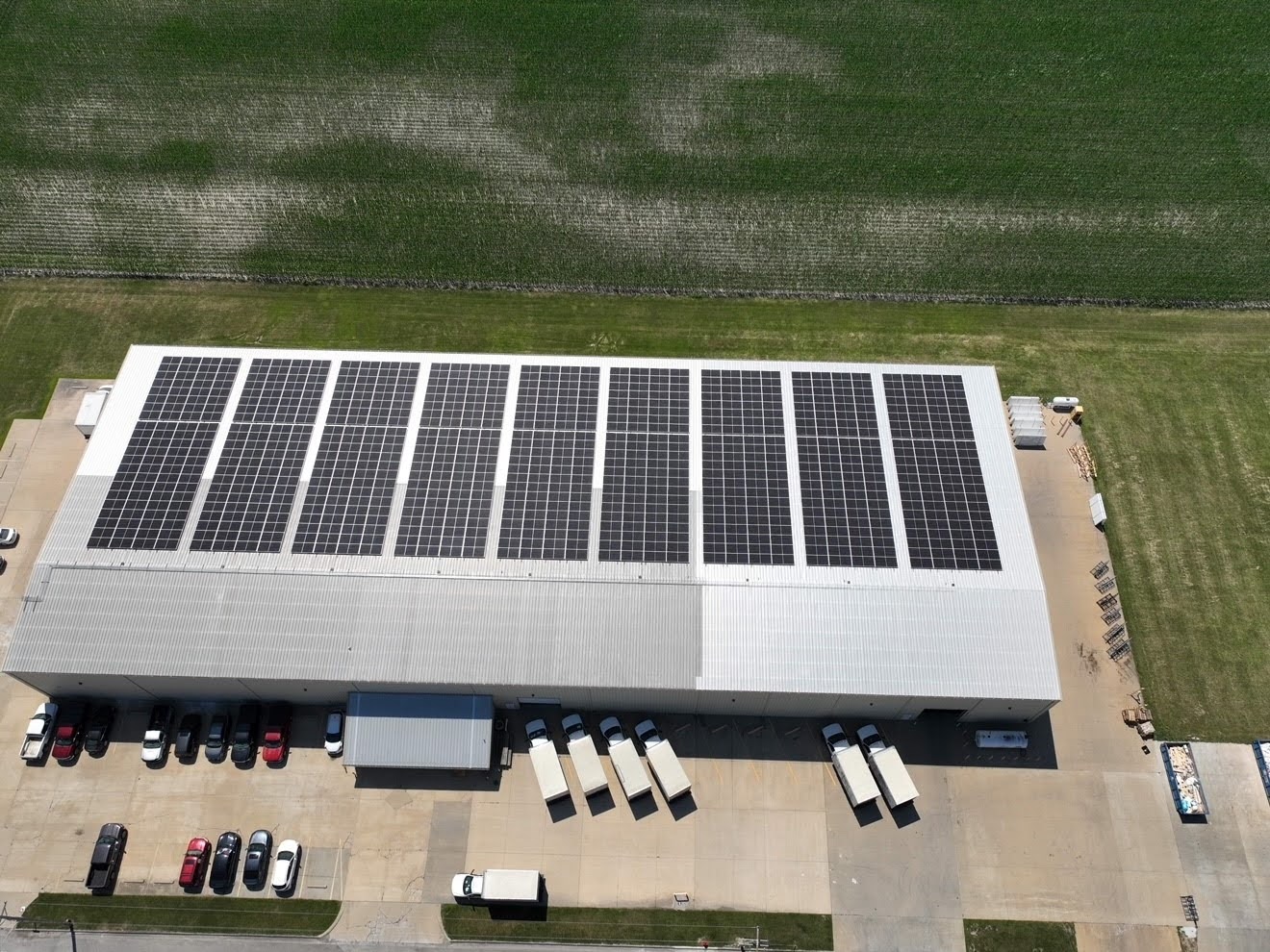
Commercial systems fall under the Large Distributed Generation category (larger than 25 kW, up to 5 MW), which is paid differently than a residential system. Rather than a single upfront payment, Large DG projects receive a 15-year REC contract, with roughly 15% paid at energization and the remainder paid out over the following six years. Per-SREC values vary by system size and utility territory, so the exact figure depends on your project. As a designee of Carbon Solutions Group, SES manages the REC application, block positioning, and contract requirements on your behalf.
Don’t Delay! Call 866-643-8331 or Schedule Your Free Consultation Today.
The Ameren Illinois Distributed Generation Rebate
If your facility is served by Ameren Illinois, you may also qualify for the Distributed Generation Rebate, a separate upfront utility incentive that lowers your installation cost and stacks with Illinois Shines. Ameren pays a rebate per kilowatt of capacity installed for systems with a qualifying smart inverter, with commercial rates set by your rate class (generally in the range of $250 to $300 per kilowatt). Adding battery storage increases the rebate, since Ameren also pays for qualifying energy storage. SES applies for the rebate on your behalf once your system is energized and will explain how it interacts with net metering so you can make the best decision for your operation.
Stacks With Federal Tax Incentives
Unlike residential solar, commercial projects still qualify for federal tax incentives, and they stack on top of your Illinois Shines revenue. The 30% federal Investment Tax Credit under Section 48E remains available, and projects can pair it with 100% first-year bonus depreciation. Because the SREC payments are independent of the federal credit and depreciation, all three can apply to the same project, a combination that can offset a substantial portion of total cost.
One important note on timing: the federal credit now carries firm deadlines under the One Big Beautiful Bill Act, so the schedule matters. Our Commercial Solar Incentives page covers those details, and our team will help you plan the timeline to protect your eligibility.
Timing is Everything
Two clocks are running at once. Illinois Shines operates in limited capacity blocks, and when a block fills, new projects wait for the next opening. At the same time, the federal tax credit has its own construction deadline of December 31, 2027. For commercial and institutional systems, which move through design, engineering, permitting, and interconnection before construction begins, the projects that start planning early are best positioned to capture the full stack of commercial solar incentives in Illinois.
Capturing Your Commercial Solar Incentives in Illinois
Between Illinois Shines, the Ameren rebate, and federal tax incentives, Illinois is one of the best states in the country for commercial solar. SES manages the SREC application, paperwork, and program requirements for you, and as an employee-owned company that engineers and installs every project in-house, we give you a single accountable partner from design through long-term performance.
Ready to model the incentives for your facility? Request a consultation, and we’ll walk you through what your project qualifies for.